

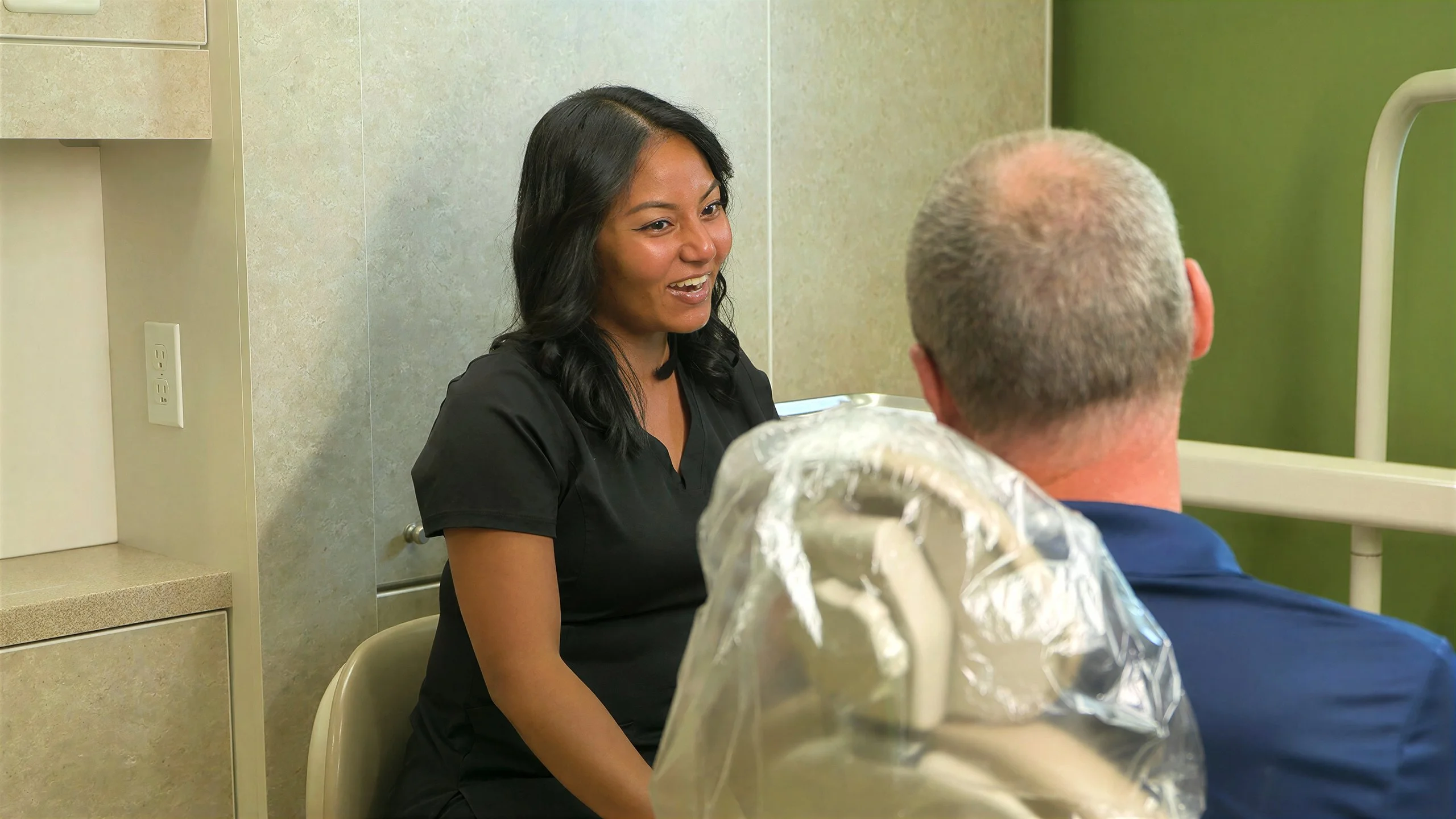
Perinatal and Infant Oral Health
Pregnancy is an exciting time, and a crucial one for your baby’s oral and overall health. Research links maternal periodontal disease (gum disease) with premature birth, low birth weight, preeclampsia and gestational diabetes, so excellent oral health throughout pregnancy is essential.
Why are perinatal dental checkups important?
The perinatal period runs from about 20–28 weeks into pregnancy until 1–4 weeks after birth, and a dental checkup is often the last thing on an expectant mother’s mind. But a mother’s cavity-causing (cariogenic) bacteria are linked with a wide range of problems for infants and young children, so the American Academy of Pediatric Dentistry (AAPD) advises regular checkups and counseling during pregnancy for prevention, intervention and treatment.
- Brush and flossBrush at least twice a day with an ADA-approved fluoridated toothpaste, floss daily, and use an alcohol-free mouthwash every day.
- Chew gumChewing xylitol gum 3–5 times a day has been shown to reduce cavities in infants and toddlers. No other sugar substitute has proven beneficial in clinical studies.
- Evaluate your dietKeep a food diary and cut down on sugary and starchy foods, which feed oral bacteria and raise the risk of tooth decay.
- See the dentist regularlyRegular visits support your home care and give you strategies for reducing oral bacteria.
How can I care for my infant’s gums and teeth?
Cavity-causing bacteria can pass from parent to child through shared eating utensils and pacifiers “cleaned” in a parent’s mouth. Use separate utensils, and rinse pacifiers with warm water instead.
- Wipe gumsCavities can start as soon as the first tooth appears. Wipe young infants’ gums with a damp cloth after every feeding.
- BrushGently brush twice a day with a soft-bristled brush and a tiny sliver of ADA-approved non-fluoridated toothpaste (for children under two).
- FlossCavities can form as soon as two teeth touch; ask the dentist how best to floss.
- Pacifier useIf you use pacifiers, choose an orthodontically correct model and never dip them in honey or other sweet liquids.
- Use drinking glassesBottles and sippy cups keep sugary liquids (milk, juice, formula, breast milk, soda or sweetened water) washing over the teeth. Offer only water in sippy cups, and stop using them after the first birthday.
- Visit the dentistAround age one, bring your baby for a “well baby” appointment to check tooth and jaw development and plan future care.
If you have further questions about perinatal or infant oral care, please contact our office.
Bruxism
Bruxism refers to an oral parafunctional activity that occurs in most humans at some point in their lives.What is Periodontal (Gum) Disease?
Periodontal disease is a common inflammatory condition of the gums that, in its most advanced stages, affects the jawbone itself.Periodontal Disease
Periodontal disease attacks the gums and bone that support the teeth, and shows as red, swollen and bleeding gums.About Periodontal Disease
Periodontal disease attacks the gums and bone that support the teeth, and it is usually painless in its early stages.Causes of Periodontal Disease
Periodontal disease, which is also known as gum disease and periodontitis, is a progressive disease which, if left untreated, may result in tooth loss.Signs & Symptoms of Gum Disease
Gum disease is the leading cause of adult tooth loss. Learn the signs, from bleeding gums to loose teeth, so it is caught early.

New patients welcome
Emergency calls and appointments are available and welcome, especially for new patients seeking help.