


Bruxism
Patient educationBruxism
Bruxism, grinding the teeth and clenching the jaw, happens to most people at some point, by day or by night. It is one of the most common sleep disorders and does most of its damage during sleep.
What causes it
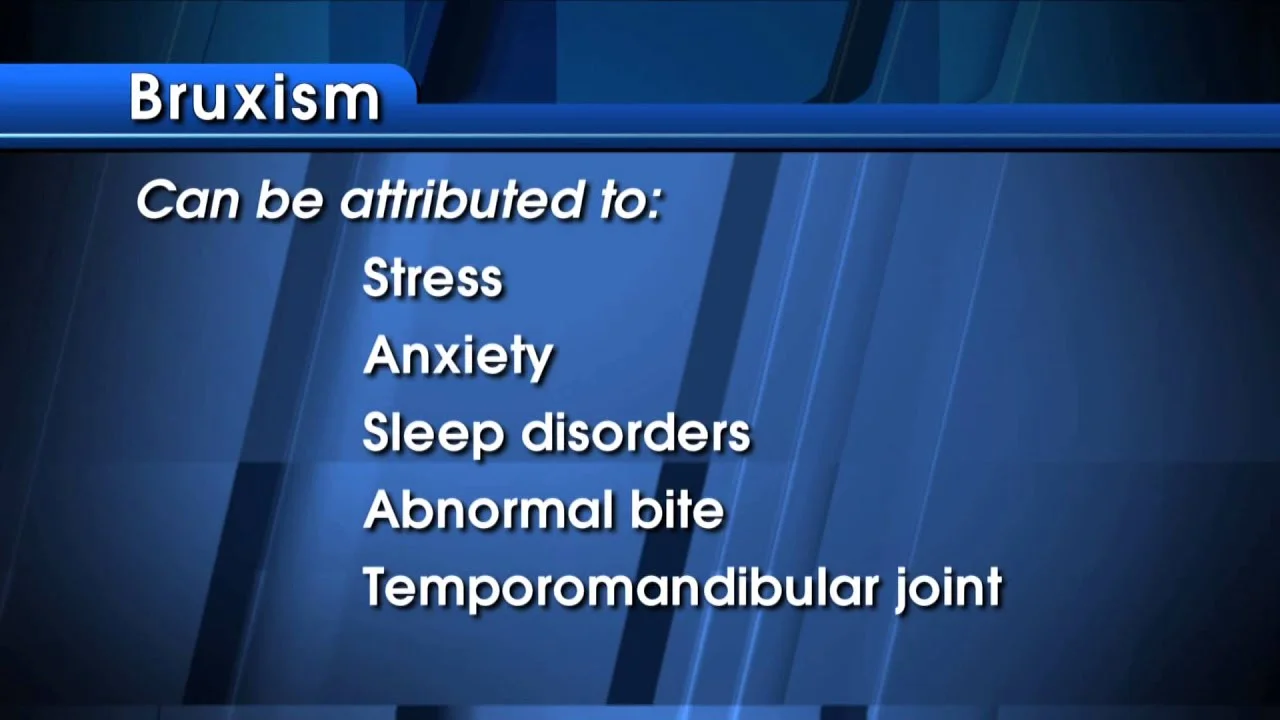
In people with bruxism, the chewing reflex that normally switches off during sleep stays active, even during naps. The front six upper and lower teeth typically grind side to side, straining the medial pterygoid muscles and the temporomandibular joints. Common symptoms include earache, headaches, depression, eating disorders and anxiety, which also accompany chronic stress, Alzheimer’s disease and alcohol abuse.

Diagnosis
Bruxism is often misdiagnosed or missed, because tooth wear has several causes. Only a trained professional can tell bruxing wear from wear caused by overly aggressive brushing, acidic soft drinks or abrasive foods.

- Gum recession and tooth lossBruxism is a leading cause of both, loosening teeth and creating deep pockets where bacteria destroy the supporting bone.
- Occlusal traumaAbnormal wear on the chewing surfaces can fracture teeth, which may need restorative treatment.
- ArthritisSevere, chronic bruxing can lead to painful arthritis in the temporomandibular joints (TMJ).
- Myofascial painGrinding shortens and blunts the teeth, which can cause debilitating headaches and muscle pain.

Treatment options
There is no single cure, but a custom acrylic mouthguard made from impressions, worn long term during sleep, reduces tooth wear and protects the teeth and jaw joint.
Relaxation exercises, stress management and biofeedback can also help. Once the bruxing is under control, crowns, gum grafts and crown lengthening can restore the look of your smile. If you have questions or concerns about bruxism, please contact our office.
Bruxism/Teeth Grinding
A short video from the American Dental Association.

What is Periodontal (Gum) Disease?
Periodontal disease is a common inflammatory condition of the gums that, in its most advanced stages, affects the jawbone itself.Periodontal Disease
Periodontal disease attacks the gums and bone that support the teeth, and shows as red, swollen and bleeding gums.About Periodontal Disease
Periodontal disease attacks the gums and bone that support the teeth, and it is usually painless in its early stages.Causes of Periodontal Disease
Periodontal disease, which is also known as gum disease and periodontitis, is a progressive disease which, if left untreated, may result in tooth loss.Signs & Symptoms of Gum Disease
Gum disease is the leading cause of adult tooth loss. Learn the signs, from bleeding gums to loose teeth, so it is caught early.Types of Periodontal Disease
From gingivitis to advanced periodontitis: the types of gum disease, how they progress, and how each one is treated.

New patients welcome
Emergency calls and appointments are available and welcome, especially for new patients seeking help.