

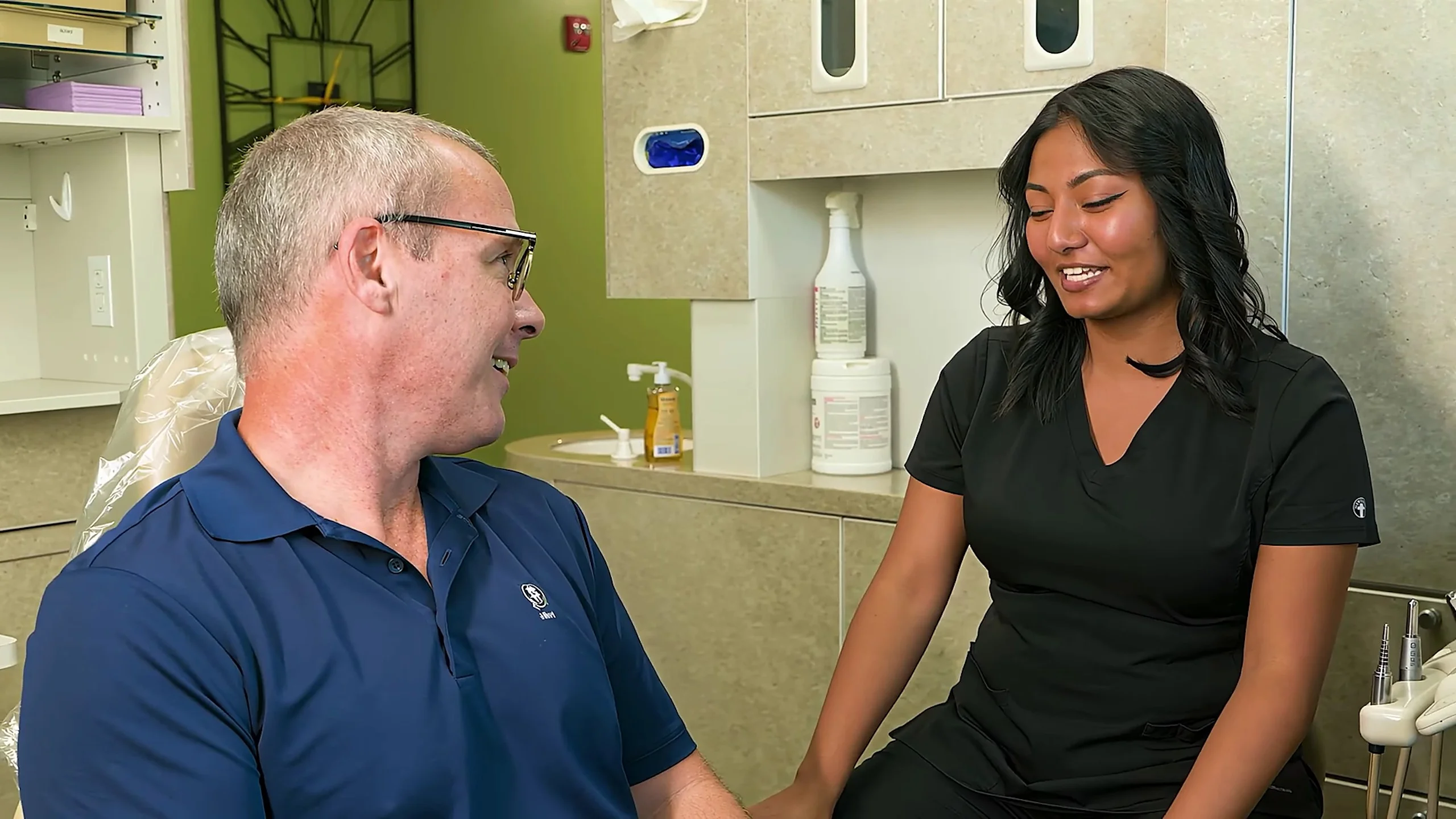
Oral Cancer Screening
Catching it early matters
Oral cancer begins with the development of abnormal carcinoma cells and results in the growth of cancerous lesions. This type of cancer can develop in the mouth, cheeks, gums, tongue, lips, palate, sinuses, throat, or the mouth’s floor. Oral cancer screenings should be done once a year per patient.
Why screening matters
Oral cancer begins with an asymptomatic stage, when the usual signs may not be noticeable, which makes the screening at your regular check-ups critically important: diagnosed early, treatment is generally very effective. Many oral cancers are linked to tobacco use and excessive alcohol consumption, and your dentist can help with making lifestyle changes. Oral cancers commonly occur in the:
- Lips
- Mouth
- Tongue
- Salivary glands
- Throat (oropharyngeal region)
- Gums
- Face
What we look for
During the exam, your dentist and hygienist check the mouth and face carefully for signs of change:
- Red patches and soresOn the floor of the mouth or the tongue, patches that won’t heal, or sores that bleed easily.
- LeukoplakiaA hard white or gray, slightly raised lesion that can be, or become, cancerous.
- LumpsSoreness, lumps or thickening of tissue in the throat or mouth.
Healthy tissue is smooth and pink. Most changes, like geographic tongue or a cyst on the palate, aren’t serious, but only an evaluation can tell.

What to expect
The oral cancer exam is painless, takes only a few minutes and is usually part of a comprehensive or check-up exam. The dentist looks for abnormalities and feels the face, glands and neck for unusual bumps.
If cell changes are present, the dentist takes a small biopsy for laboratory review and decides on the best treatment once results are back. Your dentist and hygienist look for changes at every twice-yearly check-up, but a dedicated, comprehensive oral cancer screening should be done at least once a year.

Tobacco and your mouth
Aside from being a socially undesirable habit, smoking can result in oral cancer, reduce smelling and tasting abilities, compromise recovery after oral surgery, stain the teeth, and increase the risk of periodontal disease.
Tobacco use in any form brings the mouth into direct contact with cancer-causing agents. Smokeless tobacco is often mistakenly seen as the “safer” option. In fact, it delivers a greater concentration of harmful agents into the body, is far more addictive, and causes leukoplakias, which are dangerous pre-cancerous lesions.
Frequently Asked Questions
What are the warning signs of oral cancer?
In some cases, oral cancer is not noticeable or even painful until its later stages. Watch for changes in the way the teeth fit together, difficulty moving the jaw, mouth sores that don't heal, numbness or tenderness, and red or white spots on the cheek, lip, or tongue. Any noticeable abnormality in the tongue, gums, mouth or surrounding area should be evaluated as quickly as possible.
Does an oral cancer screening hurt?
No. The screening is painless and only takes a few minutes.
How can I help my child avoid tobacco?
Talking to your child about the dangers of tobacco use (or asking the dentist to talk to them) has proven an effective strategy. Parents should also lead by example: children of non-smokers are less likely to pick up the habit.

New patients welcome
Emergency calls and appointments are available and welcome, especially for new patients seeking help.