


What is a Periodontist?
Patient educationWhat is a Periodontist?
A periodontist is a dentist who specializes in the soft tissues of the mouth and the jawbone that supports the teeth. After graduating from an accredited dental school, a periodontist completes three more years of residency focused on surgical and non-surgical management of periodontal disease and placing dental implants.
Conditions treated by a periodontist
Periodontists prevent, diagnose and treat gum disease, gingivitis, periodontitis and bone loss. Periodontal disease is progressive and the leading cause of adult tooth loss in the developed world. Whether it is mild, moderate or advanced, the periodontist first treats the underlying bacterial infection with periodontal treatment, then teaches good oral hygiene.
- GingivitisMild inflammation of the gums, with or without pain and bleeding.
- Mild/moderate periodontitisPockets between the teeth and gums measuring 4–6mm.
- Advanced periodontitisPockets deeper than 6mm, with possible significant bone loss and shifting or lost teeth.
- Missing teethWhere bone loss has cost teeth, prosthetic teeth anchored to the jawbone restore function.

Treatments performed by a periodontist
Periodontists halt gum disease, replace missing teeth and improve the look of the smile.
- Implant placementA natural-looking prosthetic tooth anchored to the jawbone.
- Osteoplasty (hard tissue recontouring)Reshaping the bone after periodontitis is treated, for a natural-looking smile.
- Gingivoplasty (soft tissue recontouring)Removing tissue or straightening the gum line when receding gums make teeth look long.
- Bone graftingAdding or “growing” bone so an implant can be properly secured.
- Deep pocket cleaningsScaling and root planing, sometimes under local anesthetic, to remove debris and bacteria from deep pockets.
- Crown lengtheningRemoving some gum tissue to expose more of the natural tooth.
Please contact our office if you have any questions or concerns.
Periodontics
A short video from the American Dental Association.
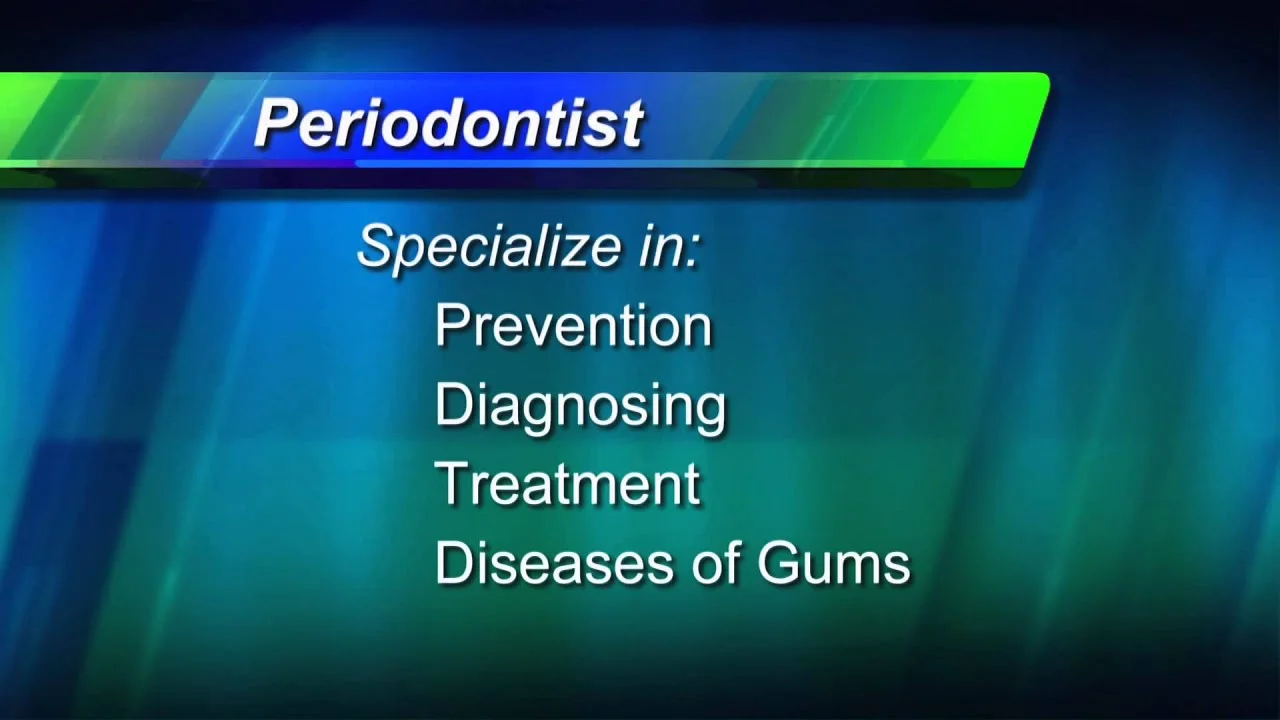

When to See a Periodontist
A periodontist specializes in preventing, diagnosing and treating gum and jawbone disease. Here's when a referral makes sense.The Mouth–Body Connection
Gum disease is linked with diabetes, heart disease, pregnancy complications and respiratory disease. Healthy gums lower the risk.Gum Disease, Heart Disease and Stroke
People with gum disease are nearly twice as likely to have coronary heart disease, and oral infection is a risk factor for stroke.Periodontal Disease and Diabetes
It is well documented that people who suffer from diabetes are more susceptible to developing infections than non-diabetes sufferers.Periodontal Disease and Osteoporosis
Periodontal disease is characterized by a progressive loss of supportive gingival tissue in the gums and jawbone.Gum Disease and Respiratory Disease
Periodontal disease (also called periodontitis and gum disease) has been linked to respiratory disease through recent research studies.

New patients welcome
Emergency calls and appointments are available and welcome, especially for new patients seeking help.