

Porcelain Fixed Bridges in Fort Wayne
Patient educationPorcelain Fixed Bridges
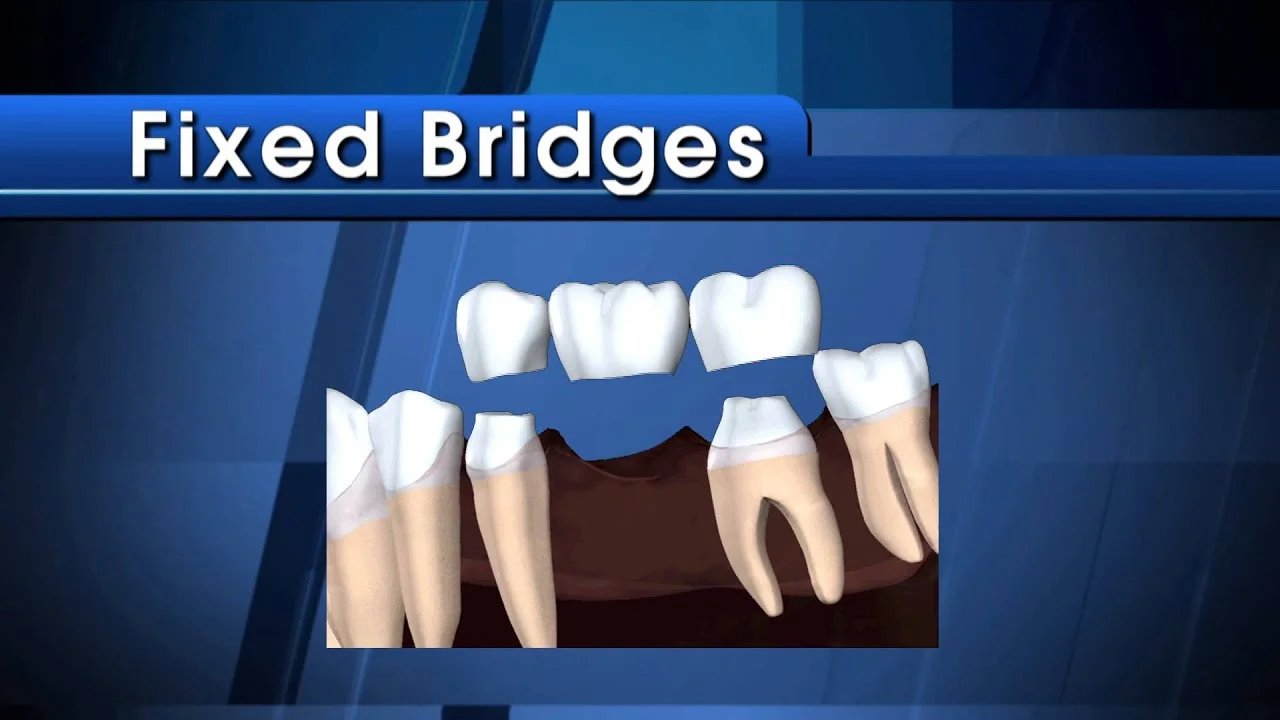
A dental bridge is a fixed (non-removable) appliance and an excellent way to replace missing teeth. There are several types of bridges, and you and your dentist will discuss the best option for you.
The traditional porcelain bridge
The “traditional bridge”, usually porcelain fused to metal, is the most popular type because it resembles your natural teeth. Two crowns fit over the anchoring (abutment) teeth and hold pontics (artificial teeth) that fill the gap left by one or more missing teeth. Bridges are highly durable and last many years, though normal wear may mean replacing or re-cementing them.
- Fill the space of missing teeth
- Maintain facial shape
- Keep remaining teeth from drifting out of position
- Restore chewing and speaking
- Restore your smile
- Upgrade from a removable partial denture to a permanent appliance
What getting a fixed bridge involves
A bridge usually takes two or more visits. While the teeth are numb, the two anchoring teeth are prepared for crowns by removing some enamel. A highly accurate impression (mold) is sent to a dental laboratory to make the bridge, and you wear a temporary bridge for several weeks.
At the second visit, the bridge is checked, adjusted and cemented. Occasionally the dentist cements it temporarily first so your teeth and tissue can adjust, then permanently later. You will receive care instructions, and proper brushing, flossing and regular dental visits help your bridge last.
Bridges
A short video from the American Dental Association.
Fixed Bridges
A dental bridge is a fixed (non-removable) appliance and is an excellent way to replace missing teeth.Inlay Restorations
An inlay is a custom-made filling of composite, gold or tooth-colored porcelain, made by a dental lab and cemented into the tooth.Onlay Restorations
An onlay restoration is a custom made filling made of composite material, gold, or tooth-colored porcelain.Porcelain Inlays
An inlay restoration is a custom made filling made of composite material, gold, or tooth-colored porcelain.Cracked Tooth
Cracked and fractured teeth are common dental problems.Prosthodontics
Prosthodontics is the specialized field of dentistry concerned with diagnosing, planning and executing restorative and cosmetic treatments.
New patients welcome
Emergency calls and appointments are available and welcome, especially for new patients seeking help.